
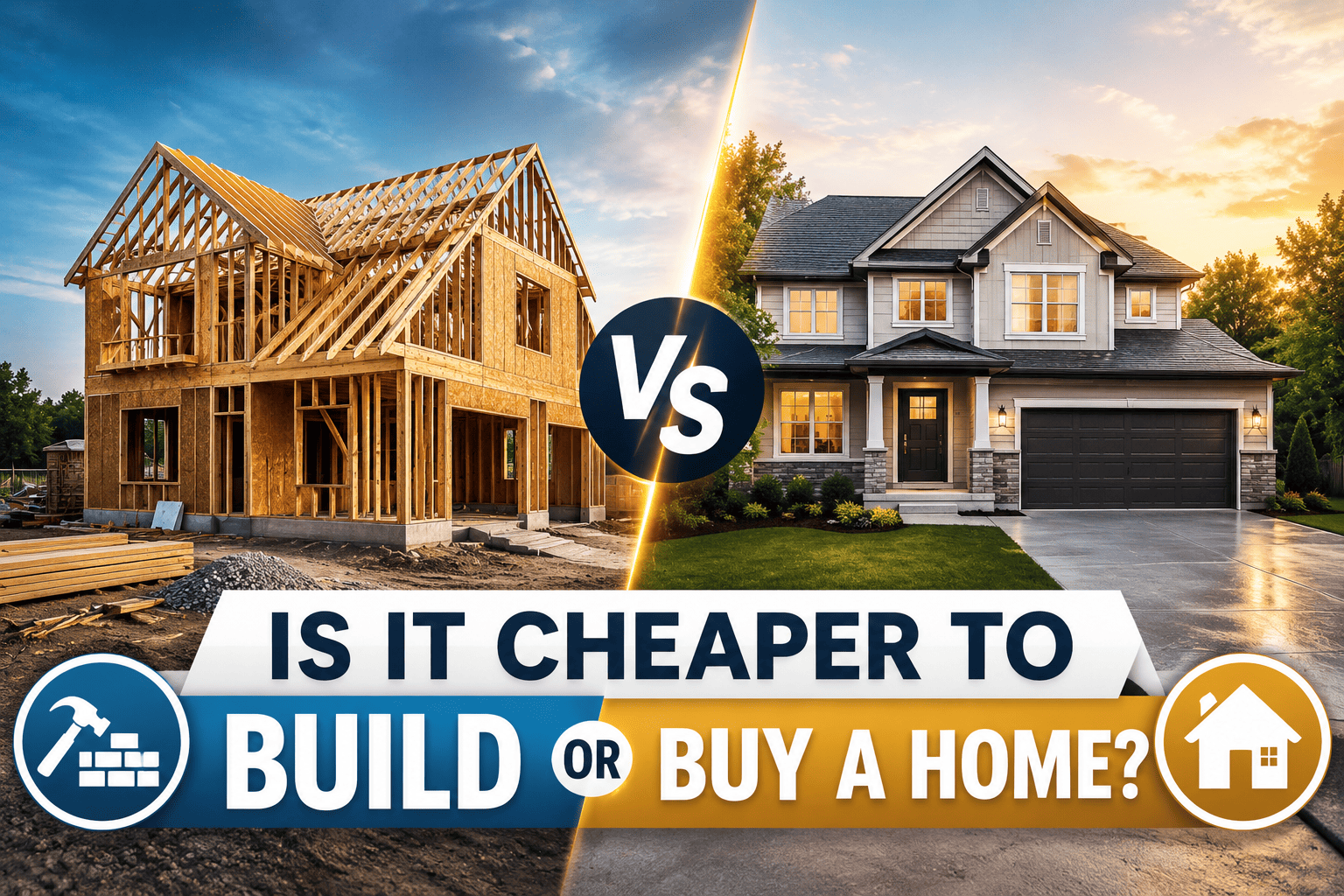
Owning one’s own house is a dream shared by many people. The real question once you make up your mind is ‘is it cheaper to build or buy a home?’ Home construction costs usually consist of things like land clearing and custom designs that make it quite expensive. On the other hand, buying a preexisting home comes with property transfer taxes and costly hidden damage repair services. If you’re having trouble choosing between buying vs building a home for your future, you should give the following article a read.
For trusted guidance and quality residential construction solutions, High Quality Homes is here to help you make the right choice.
The Price Tag Of Your Dream Space: The True Cost Of Home Construction
Building a house from scratch gives you the unique advantage of being involved with every minor and major decision. This ensures that the final product is something that you’ll love. However, this liberty adds to the cost to build a house. Clearing and preparing the site, acquiring building permits, and securing utilities add thousands to the project. This section explores all the charges associated with residential construction.
Take note as we list them all.
Custom Designs
When property owners choose to build their own home, they ensure every window placement, each room angle and all countertop heights are to their personal liking. These custom home designs and alterations cost far more than choosing a generic design.
Permit Fees
After the designs are finalized, you’ll have to get them approved by local building departments. Depending on where you’re building the house, you should be ready to pay $1,000-3,000 for the paperwork. Nationally, regulatory costs now account for over a quarter of a new home’s final price.
Site Preparation Expenses
Before the construction can start, you’ll have to get labor to take down trees, remove shrubbery, level the land and excavate it before the foundations are ever built. So, this adds another $1,500-10,000 to the project expense.
Material Costs
When you build your own home, you can’t take advantage of economies of scale. Each recycled steel beam and low-E glass panel is sourced specifically for your own project alone, so the venders and suppliers may charge more.
Utility Connections
Finally, you need electricity, water and gas to make the place livable. Depending on your state and where exactly you decide to build the new house, the connection charges can vary significantly. So, keep this in mind when you decide to build.
The Hidden Expenses Of Buying A Home: What To Know Before You Sign
In contrast, when you search for a constructed house that meets all your criteria, the process is faster and 25-30% cheaper. However, buying a home does come with its own unique expenses. New property owners have to book a professional for residential inspections along with code compliance upgrades for safety. This section is your new home buying guide; preparing your accounts for future expenses.
Continue reading as we break them down.
Inspection Fees
As a responsible property owner who values their hard-earned savings, you can’t just purchase the first pretty house. You need a professional to inspect the integrity of the house. Depending on specifics, you’ll be charged $300-600 for the service.
Hidden Damages
If you choose to skip this step for some reason, you might come across hidden structural damages like a weakened foundation, rotting subfloors and poorly insulated attics. Restoring the property means thousands more that you probably weren’t expecting to spend.
Code Compliance Upgrades
Is it a new house you’re buying? Or an old one? If the property is dated, you’ll have to bring it up to code for safety. So, if you’re updating the window panes, adding new wiring or changing the vents, you’ll have to pay thousands more.
Land Transfer Taxes & Title Insurance
Buying a house means that you need to pay the local government for ownership transfers. Depending on the state you live in and the property price, the final figure can look completely different.
Future Customization
If you move into the house but decide that it needs some adjusting, you’ll be doing a bit of renovation work. So, the floor replacements, residential painting, and solar infrastructure installations should also be taken into consideration.
Conclusion
To conclude, the cheaper option between buying vs building a home depends on your area, local labor and material prices, and your needs. Home construction costs come with custom designs and permit fees; while a purchase includes things like inspection fees and future personalization. We hope this blog answered your question of ‘is it cheaper to build or buy a home?’ For more queries, please reach out.
FAQS
How long does residential construction take?
Depending on project specifics, construction usually takes 7-14 months.
How long does the ownership transfer take for a home purchase?
Everything from the paperwork to the final signing over can take 2-8 weeks.
How do I find the right team for home construction?
Look for certified locals with experience, good reviews, and transparent pricing.